
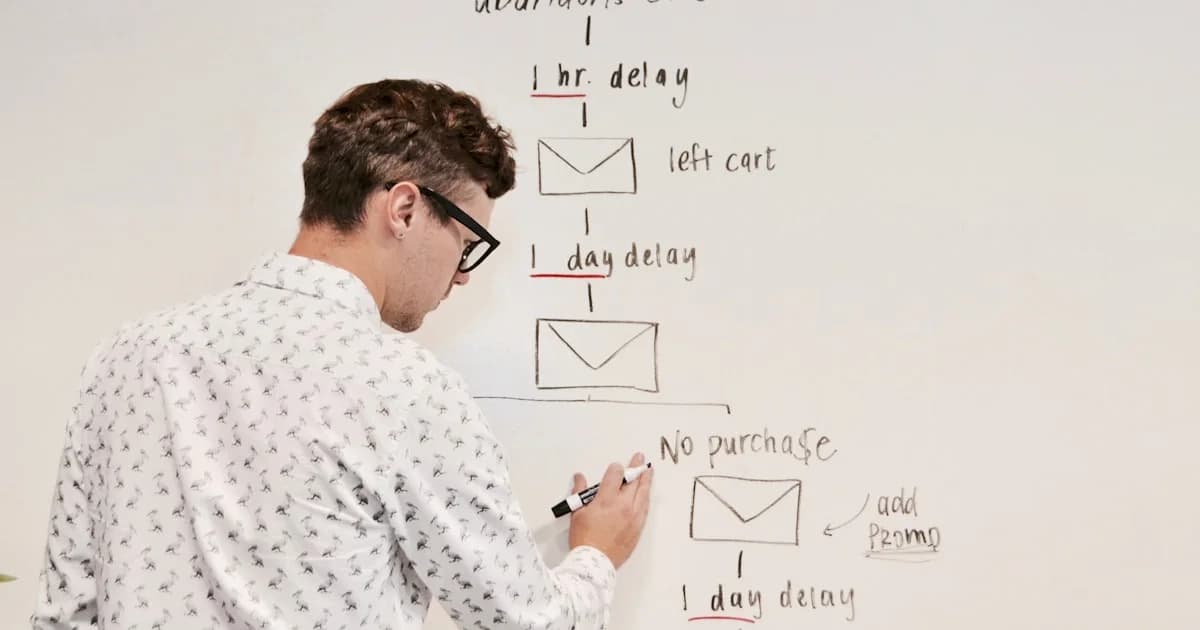

Let staff challenge a specific AI claim, capture the answer and citation, and send the evidence to the person responsible for that document. The owner should approve any source correction before publication. Then check the assistant’s answer against the approved version and report the outcome to the staff member.
A useful feedback loop needs more than a thumbs-down button. It must explain what was disputed, who can resolve it and how you know the correction reached future answers. For custom AI agents, design this as an accountable workflow within your broader AI automation process.
Capture the claim while the evidence is available
Let someone flag an individual sentence without rewriting the whole conversation. Preserve the original question, disputed wording, answer timestamp and cited document reference. Ask for a short explanation: wrong fact, missing exception, unclear wording, conflicting sources or no supporting citation.
Keep proposed replacement wording separate from the original answer. A staff member may know something useful without having authority to change the procedure. Their suggestion starts an investigation; it does not become approved knowledge.
OpenAI’s file search documentation describes retrieval from uploaded files and response annotations containing file citations. Those references can help identify the file involved, but your workflow must capture the disputed claim and relevant passage. Source: OpenAI file search
Preserve enough of the cited version to reconstruct the issue after an edit. Use a version reference and relevant extract rather than copying an entire confidential document into a broadly accessible feedback queue. Keep access appropriate to the original material.
Decide what actually needs fixing
The reviewer should compare the answer with the passage it cites before deciding to edit anything. A correct source can produce an incorrect answer, and an accurate summary can expose an outdated document.
| Finding | Human handling |
|---|---|
| The source contains an incorrect instruction | Document owner prepares a correction for approval. |
| The source is correct but the answer changes its meaning | Assistant maintainer investigates interpretation and tests the question. |
| The relevant exception was not retrieved | Maintainer investigates retrieval; owner checks whether the exception is clearly documented. |
| Approved documents conflict | Responsible owners resolve the conflict before replacement wording is published. |
| The complaint expresses a preference | Owner explains the existing instruction or considers a separate change proposal. |
Do not measure success by the number of documents edited. A well-handled challenge may end with no source change and a clear explanation. For the division between model judgement and defined workflow steps, see AI agents versus automation.
Route the case to an owner who can decide
Maintain a document-to-owner register with a named backup or responsible team. Route using the cited document identifier, rather than asking the AI to guess ownership from someone mentioned in the text.
If ownership is missing, send the case to a knowledge coordinator to assign it. Keep it visibly unassigned until someone accepts responsibility. A notification sent to a shared inbox is not evidence that a person has taken the case.
For an ordinary procedure question, the document owner may approve a clarification. Where the answer concerns employment, payments, legal obligations or another sensitive decision, prepare the evidence for the appropriate responsible person. The assistant should not settle the underlying decision.
AI can help organise a report into consistent fields. OpenAI’s Structured Outputs documentation supports schema-constrained responses, while also noting that structured outputs can contain mistakes. Required fields therefore do not prove that a claimed correction is accurate. Source: OpenAI structured outputs
Use a reusable challenge-and-correction runbook
The following is a proposed operating checklist. Assign named people to its roles before using it.
Staff challenge and source correction checklist
- Capture: Record case reference, reporter, original question, answer timestamp and exact disputed claim.
- Locate: Record citation, document identifier, version and relevant passage; mark absent evidence as missing.
- Explain: Record why the claim is challenged and any supporting evidence; label replacement wording as proposed.
- Protect: Keep evidence within its permitted audience; avoid unnecessary personal or confidential details.
- Assign: Name the document owner, backup and assistant maintainer; leave unknown ownership visibly unassigned.
- Triage: Classify as source error, interpretation error, retrieval gap, conflicting sources, duplicate or no change needed.
- Contain: Ask the responsible person whether staff need an interim warning or direct human guidance.
- Review: Compare original evidence with proposed wording; record the reviewer’s decision and reasons.
- Approve: Record approved text, approver and effective version before publication; re-review later wording changes.
- Publish: Update the authoritative document and record the published version; refresh connected retrieval content where required.
- Verify: Check source availability, repeat the original question and test a relevant exception or paraphrase.
- Close: Record results and remaining limitations; notify the reporter, or keep the case open if verification fails.
Completion rule: Close only when the recorded decision is explained and any approved correction is published and checked in the assistant. A declined correction needs a reason; a duplicate needs a link to its active case.
Review the exact correction before publishing
Show the reviewer the original passage, proposed replacement and reason for the change. Include the intended document and version. Approval should cover that specific edit; later changes need another review.
n8n documents human review for selected AI tool calls: the workflow pauses, the reviewer sees the requested tool and parameters, and approval allows execution while denial cancels it. This can support a publication gate in a workflow you build. It does not itself provide the complete document feedback process described here. Source: n8n human review for AI tool calls
Keep the authority to publish in the surrounding application or workflow. OpenAI’s function calling guide describes model tool requests followed by application-side execution. Use that separation to check approval before allowing a document update. Source: OpenAI function calling
Before deployment, check current account, plan and region eligibility for the chosen services. Also confirm where approved documents live and how their content reaches the assistant. These are implementation checks, not assumptions to hide in the runbook.
Work through ordinary, missing and duplicate cases
These scenarios and all example figures are hypothetical. They illustrate proposed human handling, not measured results.
Ordinary correction: A stores assistant asks where to send damaged-delivery photos. The AI cites a receiving guide and names the old mailbox. The reporter supplies the disputed sentence and an approved notice identifying the replacement mailbox. The receiving owner checks the notice, approves updated wording and publishes the guide. The maintainer refreshes the assistant’s source and tests both the original question and a differently worded version. The reporter receives the corrected reference.
Missing evidence: Another employee reports “the delivery answer is wrong” without a citation. Preserve the available question and answer, then ask which instruction caused concern. The maintainer checks whether retrieval evidence exists; the owner checks the relevant procedure. Do not manufacture a citation or approve a rewrite from the complaint alone. Keep the case awaiting evidence, with a responsible person named.
Ambiguous evidence: An answer says all damaged goods should be returned, while a branch note describes holding some items for inspection. The reviewer checks whether the note is an approved exception, an outdated instruction or a proposal. Until the responsible owners resolve that ambiguity, staff receive direct human guidance for the disputed situation. The model’s preferred interpretation does not settle it.
Duplicate report: Several staff flag the same mailbox instruction. A reviewer links them to the active case after checking that the claim and source version match. Preserve any new evidence and notify every reporter of the outcome. Similar wording about a different procedure remains a separate case.
Verify the answer and close the loop
Updating the document and updating what the assistant retrieves are separate steps. OpenAI’s file search guide instructs developers to check that an uploaded file is ready for use. File readiness still does not prove that the assistant answers the disputed question correctly.
Repeat the original question and check whether the answer accurately reflects the approved passage. Test a paraphrase and a relevant exception. Keep the expected meaning, actual response and citation with the case. If the source is correct but the answer remains wrong, return it to the assistant maintainer.
Use clear states such as received, assigned, awaiting evidence, under review, awaiting publication, awaiting verification and closed. Review stalled cases and repeated errors by document. The custom AI agent workflow guide provides context for connecting these steps; the custom AI agent definition explains the underlying term.
FAQ: Staff challenges and source corrections
Can staff suggest replacement wording?
Yes. Store it as a proposal alongside supporting evidence. The owner checks meaning, exceptions and authority before approving publication. Do not replace the preserved original claim.
What if the document owner rejects the challenge?
Record the reason and relevant passage, then explain the outcome to the reporter. If contradictory evidence remains unresolved, refer it to the person authorised to resolve that conflict.
Should an open challenge stop every answer from that document?
Make a targeted human decision based on the disputed instruction and consequences. An incorrect contact detail may need a narrow correction; uncertainty about a consequential procedure may require direct guidance while review continues.
If your business needs staff feedback to lead to reviewed source corrections, get in touch to discuss ownership, evidence capture and verification for your internal assistant.