


What is Facebook Lead Generation?
Facebook lead generation is the process of using targeted Meta advertising campaigns to capture the contact information of potential customers directly within the platform or via a dedicated landing page. It interrupts user attention with compelling creative and immediately relevant offers, creating demand for services that users may not have been actively searching for on platforms like Google.
Why Facebook Ads are often judged too quickly
Many businesses either overtrust Facebook Ads or dismiss them too quickly.
That usually happens because they expect the platform to behave like Google Search.
It does not.
Facebook and Instagram ads interrupt attention. They can create demand, surface interest, and capture leads, but they usually rely much more on:
- creative quality
- offer strength
- audience fit
- landing-page flow
- speed of follow-up
That is why Meta lead generation can feel excellent in one business and weak in another, even when the same budget is being spent.
When Facebook Ads tend to work best
Facebook Ads usually work best when the business has a clear offer that can be understood quickly.
That often includes:
- consultations
- audits
- offers with a clear problem-solution angle
- location-aware services
- education-led lead magnets
The harder the offer is to explain in a few seconds, the more difficult the platform usually becomes.
That does not mean it cannot work. It means the creative and funnel have to do more work.
If your business is reviewing facebook ads for lead generation in south africa, I would use this article as a practical pause point: check the current page, compare it with the real buyer question, and then decide whether the next move belongs in content, Google Ads management, or a clearer conversion path.
What South African businesses should understand about intent
This is one of the most important mindset shifts.
Google Ads often captures people who are already looking.
Facebook Ads often introduce the offer to people who were not actively searching yet.
That means:
- creative matters more
- message clarity matters more
- qualification matters more
- follow-up matters more
If a business expects cold social traffic to behave like bottom-funnel search traffic, it will often misread the channel.

What makes Meta lead generation work better
1. A focused offer
The offer should be easy to grasp quickly.
Good Facebook lead-generation offers often feel:
- specific
- low friction
- relevant to a known pain point
- credible without needing long explanation
If the offer is vague, the creative has to work too hard.
2. Strong creative
Creative is not optional here.
A serious Meta lead-generation system should test:
- hooks
- visuals
- proof angles
- CTA language
- format differences
This is one reason Facebook Ads can fail under otherwise capable marketers. The account may be managed well, but the creative layer is too weak or too static.
3. Better message match after the click
Once somebody clicks, the page or form should feel like a clean continuation of the ad.
That means the page should reinforce:
- the same promise
- the same problem
- the same next step
If the ad promises one thing and the landing page feels generic, conversion usually drops.
4. Fast follow-up
This matters heavily in lead generation from Meta.
Many leads cool down quickly if:
- nobody follows up soon
- the next step is unclear
- the business treats every lead the same
That is why Facebook Ads performance should be evaluated together with the follow-up process, not in isolation.

A practical Facebook Ads lead-generation table
| Layer | What strong performance usually needs |
|---|---|
| Offer | A clear promise that can be understood quickly |
| Creative | Active testing of hooks, visuals, and CTA language |
| Funnel | Strong message match between ad and page or form |
| Follow-up | Fast response and a clear next step |
| Reporting | Quality-based evaluation, not only lead volume |
Should businesses use instant forms or landing pages?
The answer depends on the sales process.
Instant forms can work well when:
- the offer is simple
- the next step is fast
- the lead value is moderate
- the team can respond quickly
Landing pages can work better when:
- trust needs more work
- the service is expensive
- qualification matters more
- the business needs stronger context before submission
Neither option is automatically better.
The better question is: which path is more likely to produce leads the sales process can actually convert?
If you want the landing-page angle in more detail, compare this with landing page design in South Africa and lead generation website design.
What weak Facebook lead-generation campaigns usually get wrong
There are a few repeat mistakes.
The audience is too broad
Some accounts try to solve weak creative with broad targeting.
That often leads to:
- poor fit
- weak quality
- inconsistent results
The ad is trying to say too much
If the ad needs a full sales conversation before the click, it usually struggles.
Meta works better when the message is cleaner and the next step is easier to understand.
The creative does not change enough
Fatigue matters.
Campaigns can slow down not because the channel stopped working, but because the creative system stopped moving.
The business judges success too early or too narrowly
Some teams judge success only by CPL.
Others judge success only by raw lead volume.
Neither is enough on its own.
The channel should be judged against:
- lead quality
- booking rate
- sales rate
- cost per qualified opportunity
What businesses should expect from management
If a provider is running Facebook Ads for lead generation, the business should expect more than media buying.
It should expect:
- creative testing
- audience refinement
- offer feedback
- funnel diagnosis
- reporting tied to quality, not just volume
That is why lead-generation management on Meta should feel commercially aware, not only platform-aware.
If you want the broader agency evaluation lens, compare this with digital marketing agency selection in South Africa and the public service page at Facebook Ads management.
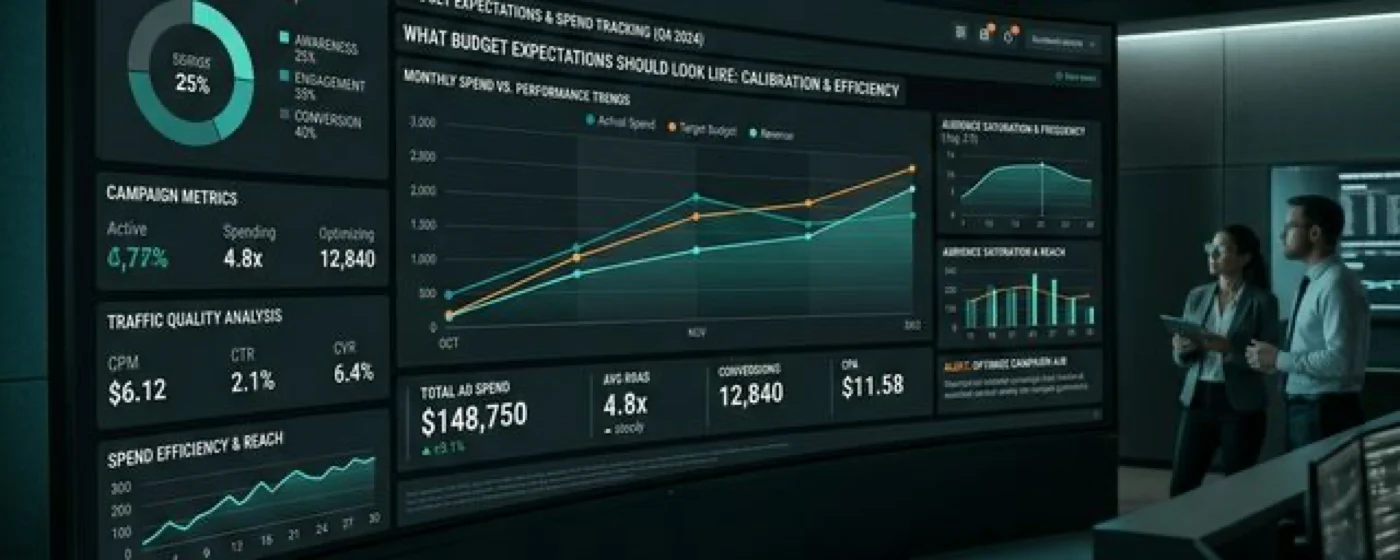
What budget expectations should look like
Meta budgets should be large enough to support learning, not only presence.
That does not always mean large numbers.
It means the business should avoid spreading a small budget across:
- too many audience ideas
- too many creative themes
- too many objectives
Focused testing usually beats thin complexity.
If you want the bigger budgeting view, compare this with digital marketing pricing in South Africa and lead generation services.
What success often looks like over time
Good Facebook lead generation often improves in stages:
- clearer data on which hooks pull attention
- better understanding of which audiences engage
- stronger lead quality from better message match
- lower waste through better targeting and creative control
- better conversion from faster follow-up
That is why the strongest systems are built patiently rather than judged only on the first few days of campaign noise.
If you want a clearer plan for facebook ads for lead generation in south africa, get in touch or book a strategy call. I can review the current page, the search intent behind it, and the most useful next step across Google Ads management, content, and conversion.
Related reading
- Service Page Conversion Elements
- Social Media Landing Pages: Turning Clicks Into Better Enquiries
- Landing Page
FAQs
Do Facebook Ads still work for lead generation in South Africa?
Yes, they can work well, especially when the offer is clear and the business has a strong follow-up process. The biggest mistake is expecting cold Meta traffic to behave like high-intent search traffic. The platform performs better when creative, offer, and qualification are treated seriously.
Should I use Facebook instant forms or a landing page?
It depends on the sales process and how much trust the buyer needs before enquiring. Instant forms can work for lower-friction offers and fast follow-up. Landing pages often work better when the service is expensive, the buyer needs more context, or qualification quality matters more than raw lead volume.
Why do some Facebook lead campaigns produce many weak leads?
Usually because the targeting is too broad, the offer is too vague, or the lead process is too easy for the wrong people and too unclear for the right ones. Stronger campaign structure, better creative, and better qualification usually improve quality more than simply changing the budget.