

Most businesses do not actually want "free leads."
They want predictable demand without having to restart the pipeline every time ad spend slows down.
That is a different problem.
Consistent leads without paid ads usually come from an organic system that makes the business easy to find, easy to trust, and easy to contact. That is why strong content SEO and solid local SEO often matter more than another burst of random posting. It is also why businesses that rely only on Google Ads often feel unstable when costs rise or campaigns pause.
If you already understand the role of Google Business Profile and Google Maps SEO, the next step is to connect those local signals to the pages that actually turn demand into enquiries.
What consistent leads without paid ads actually depend on
Google's people-first content guidance says its systems aim to prioritize helpful, reliable information created to benefit people, not pages built mainly to manipulate rankings. It also says good content should help someone learn enough to achieve their goal. Source: Google Search Central.
That matters because steady lead flow rarely comes from content volume on its own.
It usually comes from four layers working together:
| Layer | What it should do | What usually goes wrong |
|---|---|---|
| Service and location pages | Capture real commercial intent | The page is too vague to qualify the visitor |
| Local trust layer | Help the user verify the business quickly | The profile, address, or service signals are inconsistent |
| Internal linking | Move people from broad discovery to a relevant next step | Important pages are buried or linked weakly |
| Measurement | Show which queries and pages create useful demand | Teams watch traffic totals but not page-level patterns |
If one of those layers is weak, lead quality usually feels inconsistent even when impressions or clicks rise.
1. Build pages around commercial questions, not just broad traffic themes
Google's helpful-content questions ask whether the page provides original value, a substantial description of the topic, and enough information for the reader to achieve their goal. Source: Google Search Central.
That is a useful filter for lead generation.
If someone is searching with a commercial problem, the page should help them move toward a decision. A generic article might attract visits, but it may not attract the right kind of visit.
For example, a stronger organic lead setup usually includes:
- a main service page that explains the offer clearly
- supporting articles that answer objections, comparisons, or local questions
- clear proof that the business serves the kind of client it wants more of
- an obvious next step that matches the stage of intent
This is why businesses often get more from a small group of focused pages than from a large library of generic content. The goal is not to rank for everything. The goal is to own the search moments that sit closest to enquiry.
2. Make the local trust layer easy to verify
Google's business-details documentation says businesses can manage how they appear on Google Maps and Google Search by claiming a Business Profile. Once the owner is verified, they can edit address, contact info, business type, and photos, which helps local business information show in Google Maps and the knowledge panel. Source: Google Search Central.
That does not mean the profile replaces the website.
It means local trust is often checked before the site ever gets the click.
For businesses trying to reduce dependency on paid acquisition, that matters a lot. If the profile looks weak, outdated, or disconnected from the site, even good organic visibility can underperform.
The basics are not glamorous, but they move the needle:
- consistent contact details across the site and profile
- categories and service wording that match what the business actually sells
- photos and descriptions that reflect the real offer
- a linked page that continues the same promise instead of forcing the visitor to guess
This article is not another pure profile checklist. The point is broader: consistent leads come from making the local trust layer and the website support the same path.
3. Use crawlable internal links to move visitors into the right pages
Google's link best-practices documentation says Google uses links to find new pages and understand page relevance. It also says important pages should have a link from at least one other page on the site, and that good anchor text should be descriptive, concise, and relevant. Source: Google Search Central.
That is a practical lead-generation lesson, not just a technical SEO note.
If your best service page only exists in the nav, or only gets linked with generic "read more" language, you make discovery harder for both users and search engines.
A stronger path usually looks like this:
- the homepage links clearly into the main service pages
- service pages link into supporting proof, FAQs, and relevant blog posts
- blog posts link back into the commercial page that should own the next step
- contact or booking actions are easy to find without feeling forced
Strong organic lead systems feel obvious when you use them. They do not make the visitor hunt for the page that explains the offer properly.
4. Give Google clearer business data on the pages that matter
Google's local business structured-data guide says local business markup can tell Google about business hours, departments, and other details. It also says you need the required properties for eligibility and should validate the code, test the page with URL Inspection, and make sure the page is accessible for crawling. Source: Google Search Central.
You do not need to turn every blog post into a schema project.
But you do need the main commercial pages to be clear about who the business is, what it offers, where it operates, and how a searcher should verify that information.
This is especially important when the lead journey starts broad and then narrows quickly. A visitor may land on a blog post, but the trust decision often gets made on the service page, location page, or business details that sit underneath it.
If those pages are thin, inconsistent, or hard for Google to read, the organic lead engine feels weaker than it should.
5. Review Search Console like an operator, not like a spectator
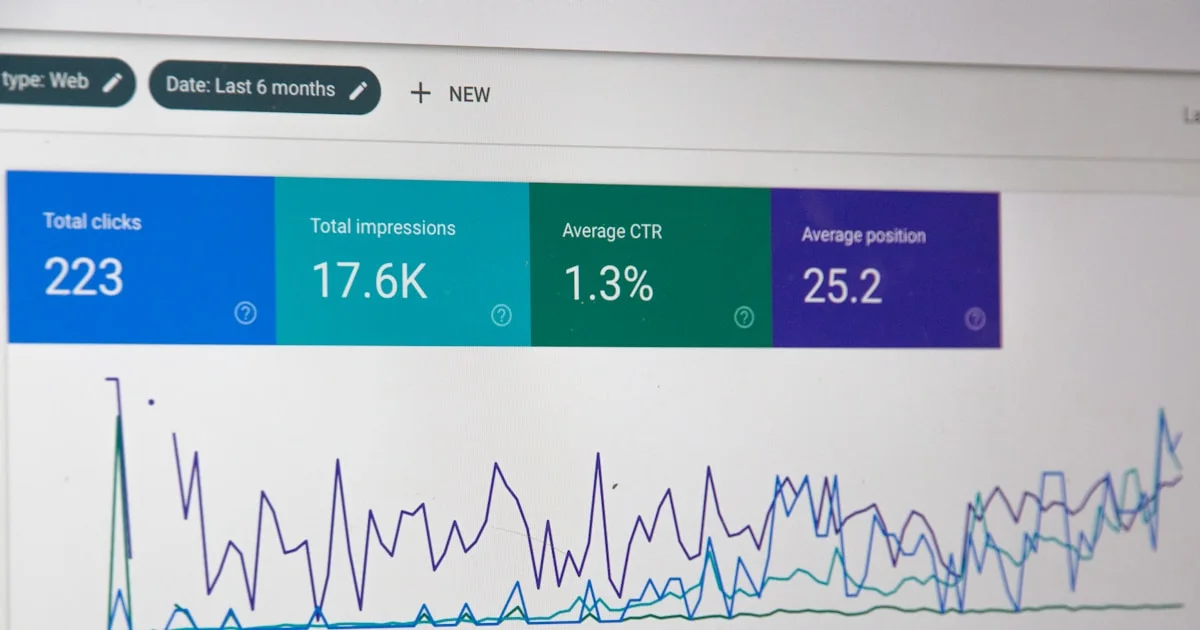
Google's Search Console getting-started guide says website owners should verify site ownership, make sure Google can find and read their pages, consider submitting a sitemap, and monitor the Search Performance report. It also says there is no need to sign in every day, but checking around once a month or after meaningful content changes is useful. Source: Google Search Central.
That rhythm is ideal for organic lead work.
You are not looking for vanity wins. You are looking for practical signals:
- which queries are bringing impressions for your key pages
- which pages are getting found but not clicked enough
- whether new or updated pages are actually being indexed
- whether the pages tied to real enquiries are gaining visibility
Search Console will not tell you everything about lead quality. But it does tell you whether Google can find, read, and surface the pages that should be doing the heavy lifting.
That is often enough to spot whether the problem is reach, page fit, or site structure.
When businesses usually get this wrong
The pattern is usually familiar.
They rely on awareness content without a clear commercial path
The blog gets updated, but the pages that should capture demand stay thin or outdated.
They treat the homepage like the only page that matters
That forces too many visitors through one broad message instead of letting them land on the page that matches their need.
They let the local trust layer drift
The profile, hours, categories, service wording, or linked page no longer match the actual offer.
They only measure traffic, not demand
Traffic can rise while enquiries stay flat if the wrong pages are attracting the wrong visitors.
A practical 90-day plan to build steadier leads
If you want a cleaner organic pipeline without leaning on paid media, start with one tight cycle.
Days 1 to 30
- choose the one service that brings the strongest-fit leads
- improve that page so the offer, proof, and next step are obvious
- align the linked local profile and core business details with that page
Days 31 to 60
- publish two or three support articles that answer real pre-enquiry questions
- link those articles back into the main service page with clear anchor text
- remove dead-end pathways that make visitors bounce into generic pages
Days 61 to 90
- review Search Console for queries, clicks, and indexing issues
- compare page performance against actual lead quality, not just sessions
- decide whether the organic path is strong enough to expand into a second service or location theme
This is the difference between organic lead generation and content churn. One builds an asset. The other fills a calendar.
When paid support makes sense again
The goal here is not to be ideological about ads.
It is to stop needing them as the only reliable source of demand.
Once the organic system is working, a layer like social media advertising can make sense because it amplifies a path that already converts. Without that base, paid campaigns often end up masking weak pages and weak qualification.
That is why businesses that want steadier lead flow usually fix the organic engine first and then decide whether paid support should accelerate it.
If you want a softer next step first
If your business is generating some traffic but not enough reliable enquiries, start with a simple self-audit. Review your Google Business Profile, your Google Maps SEO basics, and the main page you expect to convert visitors today. That softer next step usually shows whether the real issue is discoverability, trust, or page clarity.
Book a strategy call if the system feels too fragmented
If you want help turning content SEO and local SEO into a steadier lead engine, book a strategy call or contact us. If paid support is still part of the mix later, it should sit on top of a healthier organic system, not replace it.
My comparison view
For How to Get Consistent Leads Without Paid Ads, I would keep the decision grounded in evidence instead of chasing the loudest trend. The useful question is whether the page, campaign, or workflow gives a serious buyer more confidence to move forward.
| Decision area | What I would inspect | Why it matters |
|---|---|---|
| Intent match | Whether how to get consistent leads without paid ads answers the question behind the search, not only the phrase in the title. | Strong intent match keeps the article useful and reduces shallow traffic. |
| Proof and clarity | Whether the recommendation is supported by examples, sources, or visible experience. | Proof helps the reader separate a real strategy from generic advice. |
| Next step | Whether the article connects naturally to Google Ads management or a closely related support page. | Good content should help a qualified reader know what to do next. |
FAQs
How long does it take to get consistent leads without paid ads?
It depends on the market, the site, and how strong the existing pages are. Many businesses see the clearest early gains when they improve a small number of high-intent pages first instead of spreading effort across too many topics.
Can social media alone replace paid ads for lead generation?
Sometimes it helps, but social activity alone is rarely enough if the website, search visibility, and trust signals are weak. Organic lead systems usually work best when multiple surfaces support the same next step.
Do I need a Google Business Profile if I want organic leads?
If local customers matter, it is usually one of the most practical trust layers to maintain. It helps people verify who you are, where you operate, and whether your site feels like the official next click.
Should I stop paid ads completely?
Not necessarily. The better question is whether your organic lead path is strong enough that paid campaigns become optional acceleration instead of emergency demand generation.