
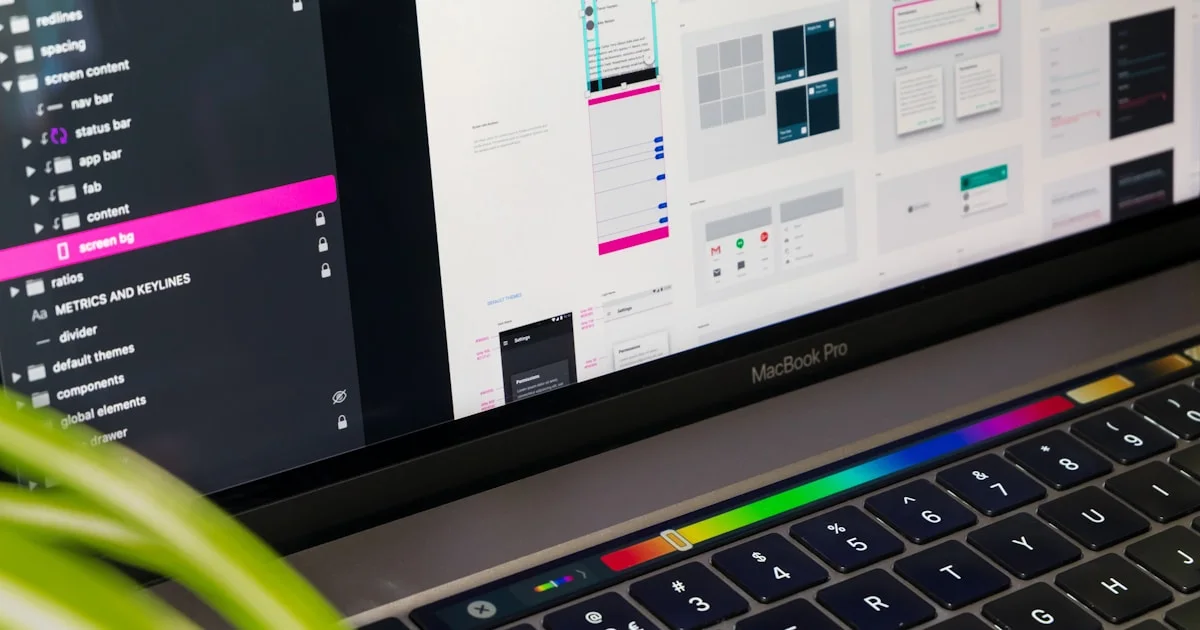

A website becomes easier to grow when it is built as a system
Many websites are treated like one-time projects.
The team launches them, makes scattered edits for a while, then reaches a point where another full rebuild feels inevitable.
That cycle is expensive.
It is also often avoidable.
Modular web design is one way of treating the website as a digital asset that can evolve in phases instead of restarting from scratch every few years.
That is why this topic supports the broader web design route, the longer-term thinking behind business websites, and later decisions around website redesign.
The point is not to reduce everything to interchangeable blocks.
The point is to make the website easier to extend without losing coherence.
Modular design starts with page roles, not visual tiles
People often hear "modular" and think only about reusable sections.
That is part of it.
It is not the whole idea.
A modular website usually starts with clearer decisions about:
- what kinds of pages exist
- what each page type is meant to do
- which sections can repeat safely
- where content variation should happen
- how new pages should be added later
Without those rules, a component library alone does not solve much.
It just makes inconsistency faster to produce.
Google's SEO Starter Guide still emphasizes logical site structure because page relationships and hierarchy shape how users and search systems understand a website Source: Google Search Central.
That matters here because modular design is only useful when the structure underneath it is deliberate.
This is also where information architecture and search intent matter early. The reusable system should still reflect real buying questions, not just visual efficiency.
Reusable sections are most valuable when they protect consistency
Reusable homepage blocks or landing-page sections are helpful for one reason:
they reduce unnecessary reinvention.
That can improve:
- publishing speed
- brand consistency
- layout discipline
- easier experimentation
- cleaner handoff between design, content, and development
For example, a business might define reusable modules for:
- hero sections
- proof blocks
- service summaries
- CTA bands
- FAQ layouts
- team or credibility sections
That does not mean every page has to feel the same.
It means the website gains a clearer design language and a safer way to expand.
If your website keeps drifting into page-by-page improvisation, reusable modules can often improve quality before a major redesign becomes necessary.
Modular thinking changes how redesigns should happen
Many redesigns happen because the current site feels messy, not because every page is fundamentally wrong.
A modular approach helps the team separate:
- what needs structural change
- what needs better content
- what needs stronger design consistency
- what needs new page types
That makes redesign work more surgical.
Instead of rebuilding everything, the team can often improve:
- navigation patterns
- section hierarchy
- proof placement
- CTA treatment
- page templates
This is one reason a modular system often reduces the long-term cost of landing pages, campaign work, and service-page expansion. The business can launch new pages with better consistency instead of restarting the design logic every time.
Governance is what makes modular design valuable
This is the part many teams skip.
Modular design only becomes a durable asset if someone defines the rules around:
- when a module should be used
- which combinations are allowed
- which modules belong on which page types
- how editors should write within the layout
- how exceptions are handled
Without governance, the website can still become bloated.
It just becomes bloated with reusable parts instead of custom one-offs.
That is why modular web design should be planned as both a design system and an operating system for the site.
CMS setup and component logic should support each other
The publishing layer matters here too.
If the website uses a CMS, the CMS model should support the modular structure rather than fighting it.
That may involve:
- clearer field groups
- safer content patterns
- repeatable section types
- editor guardrails
- more deliberate page templates
If the publishing layer becomes too loose, the modular system weakens quickly.
If the publishing layer becomes too rigid, the team stops using the system naturally.
That is why modular thinking often connects back to decisions around custom development or CMS governance, even when the site is not especially complex.
Performance and migration risk still need planning
Some teams hear "modular" and assume it automatically makes the website faster or easier to change.
Not automatically.
The benefits only hold if the system stays lean and the architecture is managed sensibly.
For Modular Web Design, Core Web Vitals still matter because loading, responsiveness, and visual stability shape whether the visitor trusts the page enough to continue Source: web.dev.
That matters because modular systems can still become heavy if too many sections, scripts, or media assets are piled into every page.
This is why Core Web Vitals, redirect management, and site migrations still belong in the conversation. A site that evolves in phases should protect performance, URLs, and page clarity as it grows.
A practical modular review table
| Area | Weak modular setup | Stronger modular setup |
|---|---|---|
| Page roles | Page types blur together | Each page type has a clear commercial job |
| Reusable sections | Modules exist but feel random | Reuse follows a deliberate system |
| CMS support | Editors can break layouts too easily | The CMS supports safer publishing patterns |
| Redesign work | Every update feels like a fresh page problem | Improvements can be made in smaller controlled phases |
| Long-term growth | New pages slowly drift off-pattern | Expansion keeps a stronger design and content rhythm |
When modular design is usually worth it
Modular web design is often most useful when:
- the business expects the site to grow steadily
- new service or campaign pages will be added over time
- several people contribute to the website
- consistency matters across many page types
- the team wants fewer full rebuild cycles
It is less useful when the site is tiny, static, or unlikely to change much after launch.
The goal is not to force a system where none is needed.
The goal is to create one when repeated growth is expected.
If your business already treats the website as an evolving sales asset, modular planning often pays off faster than another round of disconnected page tweaks.
FAQ
Does modular web design mean every page looks the same?
No. A modular system should create consistency without making every page identical. The point is to reuse strong patterns where they help, while still allowing the page to reflect its own purpose and content.
Is modular design only useful for large websites?
Not only for large sites. It can also help smaller businesses that expect steady growth, regular landing-page work, or several contributors who need a more governed way to update the site over time.
Can modular design reduce the need for future rebuilds?
Often yes. It does not remove the need for strategy, but it can make evolution much easier by letting the business improve templates, sections, and page systems in phases instead of restarting everything at once.
Build the website so improvement feels normal, not disruptive
The strongest digital assets usually do not survive because they were perfect at launch.
They survive because they were built to evolve without losing their structure.
If your website keeps drifting toward another expensive rebuild, book a strategy call or contact us and we can help map a modular path that makes future growth cleaner.