


Structure is one of the most underrated conversion levers on a website
Many businesses think about website structure only when the menu feels messy.
That is too late.
Structure shapes:
- what users understand first
- what search systems find easily
- how pages support each other
- where proof and CTAs sit in the journey
That is why this topic belongs next to SEO-friendly web design, business websites, and more focused landing pages.
Good structure helps users understand where they are and what to do next
Visitors do not land on a site with full internal context.
They need the structure to teach them:
- what the business offers
- how services are grouped
- which page is most relevant
- what supporting proof exists
- where the next step lives
If the site does not make those things easy to interpret, conversion drops because decision-making becomes harder than it should be.
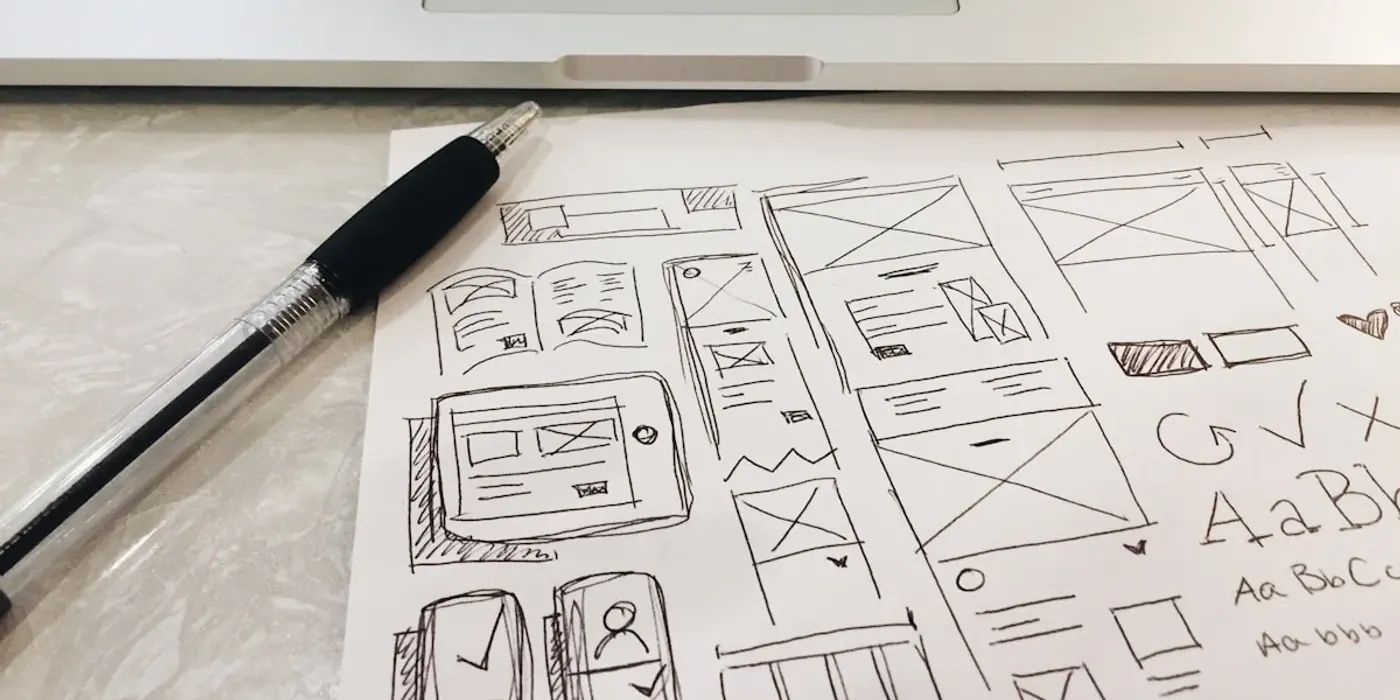
Good structure also helps search systems understand page roles
Google's SEO Starter Guide continues to emphasize logical structure and accessible important pages because people and search systems depend on that clarity Source: Google Search Central.
That matters because structure shapes:
- crawl paths
- internal links
- topic grouping
- hierarchy between parent and child pages
- how page importance is signaled
This is why information architecture and search intent should be part of website planning early.
Flat, vague structures usually weaken both SEO and conversion
Some sites push too much content into a shallow structure.
Everything sits near the top.
Very little has a clear role.
That often creates:
- generic navigation labels
- weak page grouping
- service overlap
- internal-link confusion
- pages that compete instead of support each other
The site may still look neat.
It becomes harder to use and harder to grow.
Structure affects which proof gets seen in time
This is a conversion point many teams miss.
If case studies, pricing context, service detail, or trust signals are hard to reach, the structure is already weakening enquiries.
A better structure helps visitors move naturally from:
- broad understanding
- to relevant service detail
- to proof
- to action
That path is commercial.
It is not only navigational.
Internal linking works better when page roles are clearer
Internal linking gets treated like an SEO tactic.
It is also a usability tactic.
Links work better when the site has clearer distinctions between:
- hub pages
- service pages
- location pages
- supporting articles
- conversion pages
If those roles are blurred, the site starts linking randomly instead of guiding people and reinforcing priority.
Structure should decide which pages deserve depth
One structural mistake businesses make is trying to answer every question on one page.
That usually creates overloaded pages with weak hierarchy.
A stronger structure separates:
- overview pages
- decision pages
- proof pages
- action pages
That makes both SEO and conversion easier to support because each page can do its job more clearly.
Navigation should reflect decision paths, not internal politics
One reason websites become structurally weak is that menus are often shaped by internal preference.
Departments want visibility.
Stakeholders want their section included.
The result is a navigation system that reflects the company chart more than the buyer journey.
That usually creates friction.
Visitors care about solving a problem, not about how the business categorizes itself internally.
Stronger structure often reduces page-level confusion
If the structure is stronger, individual pages usually get easier to write and easier to design.
That is because the page no longer has to explain everything at once.
It can play a clearer role.
That makes it easier to decide:
- which questions belong here
- which proof belongs here
- which CTA belongs here
- which related pages should support it
If your business has pages that feel overloaded, the structure above them may be part of the problem.
Structure also affects mobile clarity
On smaller screens, weak structure becomes visible faster.
That is because visitors have less patience for wandering through unclear menus and repeated sections.
Google's mobile-first indexing guidance also reinforces that important content should remain accessible on mobile Source: Google Search Central.
That is one reason a strong structure should support both:
- crawl clarity
- mobile decision clarity
A practical comparison table
| Weak website structure | Strong website structure |
|---|---|
| Pages overlap and compete | Pages have clearer roles |
| Navigation reflects internal preferences | Navigation reflects user decisions |
| Internal links feel random | Internal links reinforce priority and context |
| Proof is harder to reach | Proof appears closer to relevant decision points |
| SEO and conversion work in separate layers | SEO and conversion support the same journey |
What businesses should review first
If your website structure feels weak, start by checking:
- whether every important page has a clear role
- whether services are grouped logically
- whether internal links guide people to the next useful page
- whether trust-building pages are easy to reach
- whether the navigation reflects user intent or internal language
If your business is still adding pages without tightening the structure around them, growth may be creating confusion instead of clarity.
That is usually the point where a structure review matters more than another isolated rewrite.
It is also where stronger page roles start making future growth easier instead of messier.
That clarity tends to improve both publishing discipline and conversion flow at the same time.
It also makes future content expansion less chaotic.
That matters for growing service sites.
Performance and structure are more connected than they first appear
Poor structure often produces heavier pages too.
When teams cannot rely on the site hierarchy, they start overloading individual pages with extra content, repeated explanation, and too many competing sections.
That creates slower, more cluttered experiences.
This is why Core Web Vitals and rendering and JavaScript still belong in structure conversations.
FAQ
Does website structure matter more for SEO or for conversion?
It matters for both. Strong structure makes important pages easier to crawl and easier for people to use, which means visibility and conversion usually improve together.
What is a sign that structure is weak?
Common signs include overlapping pages, vague navigation, poor internal links, and important content that feels difficult to find quickly for real visitors.
Can a redesign fix structural problems without rewriting everything?
Sometimes yes, but only if the redesign starts by clarifying page roles, hierarchy, and the user journey instead of changing visuals first.
Structure should guide both discovery and decisions
That is the standard worth aiming for.
A strong site structure helps people find the right page, understand it faster, and move to the next useful step with less friction.
If the structure is weak, both SEO and conversion usually pay for it.
Fix the hierarchy before adding more pages to the confusion
If your website feels harder to navigate or harder to grow than it should, book a strategy call or contact us.
We can help map a structure that supports both search visibility and conversion more cleanly.