
On-Page SEO Services in South Africa
For businesses that already have pages live but need those pages to compete more clearly. We optimize the page itself so the click promise, structure, proof, and next-step path all support the same commercial intent.
Page Quality Layers
Page-level SEO that improves clarity, not just keyword density
SERP match
Titles and descriptions that align with the query before the user even lands on the page.
Page hierarchy
Heading flow and section sequencing that make the page easier to scan and easier to trust.
Internal context
Links, supporting entities, and page relationships that clarify what the URL should rank for.
Trust cues
Proof, media, FAQs, and CTA placement that make the page stronger commercially, not only algorithmically.
Strongest Use Cases
Primary
Service pages
Second
Refreshes
Focus
Intent match
Goal
More qualified clicks
6 Layers
Snippet, copy, structure, media, links, trust
1 URL
Built around a single commercial intent
90 Days
Typical refresh and uplift window
Higher
CTR and page quality
On-page SEO is where search intent, structure, and buying clarity meet on one URL
Weak on-page SEO usually does not look dramatic. The page may load fine. It may even have the target keyword somewhere in the title and headings. The real problem is that the page does not feel deliberately built for the query, so it struggles to earn the click and struggles again after the user lands.
Strong on-page work fixes that page-level misalignment. It sharpens the click promise, improves the section flow, adds the right proof and decision-support blocks, and makes sure the page is supported by internal context instead of being left as an isolated brochure.
If the target page is vague, generic, or structurally weak, publishing more support content will often compound the wrong page instead of strengthening the right one.
Revenue Page
On-Page SEO
Quality Signals
Surface-level edits vs strategic on-page SEO
Many businesses think the page just needs a few keyword adjustments. In practice, pages usually improve faster when the click promise, structure, and conversion path are redesigned around the target query.
- Adds the keyword to a few headings and paragraphs
- Leaves weak section order and buyer friction untouched
- Focuses on copy tweaks without improving page decisions
- Does not reconnect the URL to internal-link opportunities
- Produces a page that looks updated but still feels generic
- Useful only for cosmetic cleanup
- Rebuilds the page around a clearer commercial intent
- Improves titles, headings, FAQs, proof, and CTA flow together
- Uses comparisons and support blocks to help the buyer evaluate
- Connects the URL to adjacent services and support content
- Makes the page easier to rank and easier to convert from
- Useful for real commercial improvement
The page should not only mention the service. It should show the visitor what the service covers, why the page is credible, and what to do next if the fit is right.
Better on-page SEO comes from improving the full page stack, not one isolated element
Strong pages work because their snippet, structure, depth, context, and trust cues point in the same direction. When one layer is weak, the rest of the page has to compensate for it.
Layer 01
SERP framing
Layer 02
Content hierarchy
Layer 03
Page depth
Layer 04
Context signals
Layer 05
Trust & media
On-page SEO works best when all five layers support the same query and the same business outcome.
Strong pages do not win because one heading was rewritten. They win because the click promise, section structure, supporting context, proof, and next-step experience all line up around the same commercial intent.
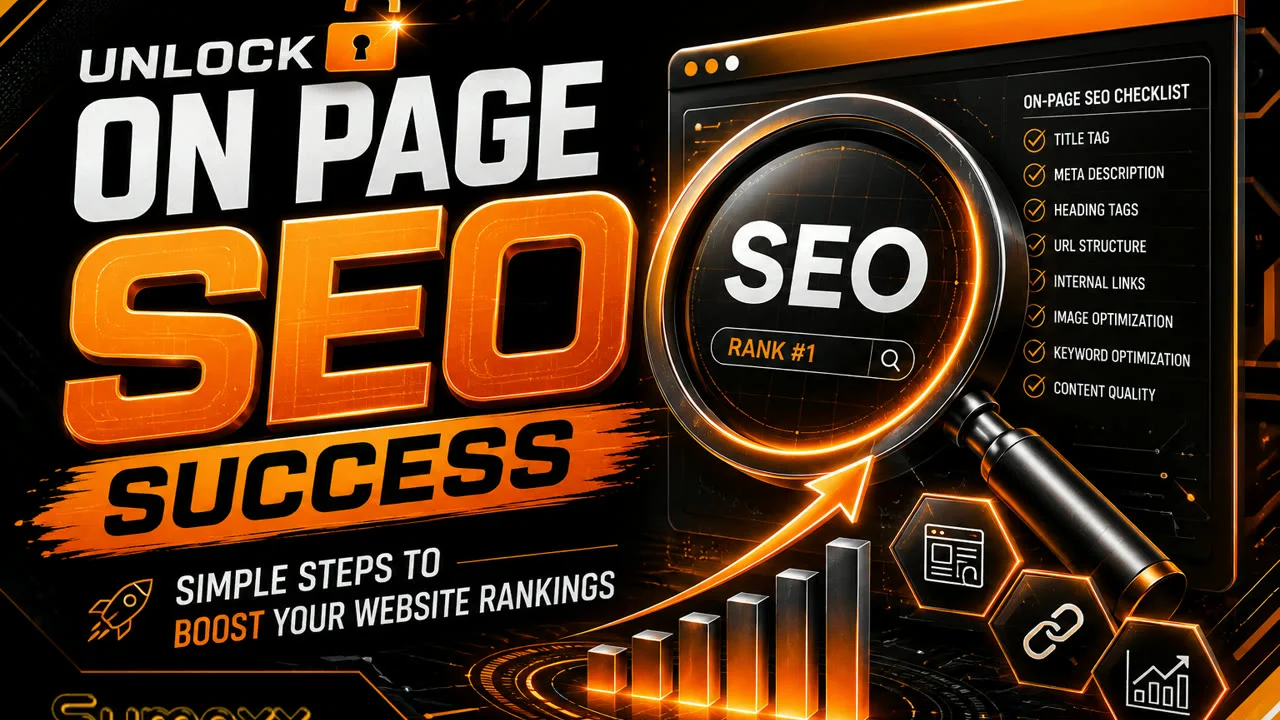
What we improve inside an on-page SEO engagement
The objective is not to touch every element for the sake of activity. The objective is to improve the elements that make the page more relevant, more understandable, and more commercially useful for the search it is targeting.
That usually means working across snippet logic, hierarchy, internal context, support blocks, media choices, and trust signals together. The page should feel engineered for the query, not merely refreshed.
Title tags and snippets
We review whether the click promise actually matches the search and whether the page is positioned clearly enough in the results.
Heading architecture
The H1-H3 sequence should guide both relevance and readability instead of acting as a collection of disconnected subheads.
Content structure
We tighten scope, remove filler, and make sure the sections answer what a buyer needs to know before taking action.
Internal linking
Commercial pages need deliberate links to adjacent services, proofs, and support content so authority is not wasted.
Media and proof
Images, diagrams, examples, and proof blocks should reduce friction and support trust instead of padding the layout.
Intent alignment
The page should feel built for the query, not retrofitted for it after the fact with a few keyword tweaks.
A practical on-page SEO workflow for core commercial URLs
The work should move from diagnosis to rebuild to QA in a sequence that makes the page easier to ship and easier to measure.
SERP and intent diagnosis
We review the current page against the live result page so we know whether the URL needs a refresh, a restructure, or a sharper commercial angle.
Page brief and rewrite plan
We map title direction, heading flow, section gaps, internal-link opportunities, and where the trust signals need to be improved.
Structural improvement
The page gets rebuilt around clearer hierarchy, stronger comparisons, better FAQs, and a layout that supports the intended action.
Internal context and QA
We connect the page to supporting docs, adjacent services, and the right conversion path so the final page works inside the broader site system.
Measurement and refresh
Post-launch, we monitor impressions, CTR, engagement quality, and whether the page now deserves to compete for the target term.
On-page SEO matters most when the right URL exists but is still underperforming
This service often sits between a full audit and a broader retainer. The site may not need a total rebuild. It may simply need the most important URLs to become more intentional, more helpful, and more commercially defensible before the next wave of content or local pages goes live.
If you are not sure whether the issue is technical, architectural, or page-level, start with an audit. If the diagnosis already exists and the next job is improving the actual URLs, on-page SEO becomes the cleaner next move.
The page gets impressions, but the CTR is weak
That usually points to a bad click promise, a generic title, or a mismatch between the query and what the page appears to offer.
The service page reads like a brochure
Pages that stay vague tend to rank poorly because they do not help a buyer evaluate the service or understand the scope.
Traffic reaches the page, but leads stay flat
On-page SEO can expose whether the page structure, CTA sequence, and trust signals are failing after the click.
The site published a lot, but the important URLs still feel thin
Publishing more support content will not solve the problem if the commercial pages themselves are still weak.
Use on-page SEO when the core pages need to become stronger before you scale
If the main service URLs still feel generic, weak, or structurally unclear, on-page SEO is often the highest-leverage place to improve before publishing more content.
- Best for refreshes of revenue pages with existing impressions
- Improves titles, hierarchy, internal context, proof, and CTA flow
- Pairs well with audits, technical SEO, and content SEO follow-through
On-Page SEO FAQs
The questions that usually come up before a business decides whether its core pages need a structural improvement pass rather than more publishing alone.
What is included in an on-page SEO service?
How is on-page SEO different from technical SEO?
Can on-page SEO help pages that already exist?
Is on-page SEO just about adding more keywords?
Which pages should be improved first?
Do you rewrite the page or only give recommendations?
How long does on-page SEO take to show results?
Can on-page SEO improve conversions as well as rankings?
From the Blog
Related On-Page SEO Insights
Supporting articles for teams improving page structure, click-through, internal linking, and content quality alongside their commercial SEO pages.
On-Page SEO Guide
Internal Linking Mistakes That Block Rankings
Why Your Service Pages Aren't Converting: 5 SEO Fixes for Higher Inquiry Rates
How to Use Internal Links Without Making Content Feel Forced
Why Your Blog Should Support Your Money Pages
Why Your Contact Page Is Your Most Important SEO Asset - And How to Optimize It
Need your core SEO pages to compete more clearly?
If the target URLs already exist but still feel too generic or thin, we can tighten the page structure. The goal is clearer intent, better rankings, and a page that is easier to act on.
No contracts. No obligation. Just a strategic conversation.